Achieving Work-Life Balance

Achieving Work-Life Balance

Achieving Work-Life Balance

The Group aims to create an attractive workplace where both employees and the company can grow together by improving the working conditions and environment, processes and systems, and workplace communication, to create a rewarding work environment where employees can balance work and family life, and where increased employee motivation leads to increased added value and productivity (creating value and producing results). Specifically, we conduct educational activities and ensure compliance with labor-related laws and regulations, work with labor and management to curb long working hours, have NO OVERTIME DAY at each business site, and we conduct activities to promote the use of paid leave and set up days to promote such use.
In particular, for employees in factories, we promote development of multi-skilled human resources and the introduction of a relief man system to create an environment where employees can systematically take paid leave.

Total annual working hours (TACHI-S business locations in Japan) (unit: hours)

FY2022 FY2023 FY2024
Overall 2,085 2,084 2,019
Male 2,112 2,114 2,032
Female 1,835 1,840 1,920
・Target: Full-time employees (general positions)
・Excludes employees on leave
・Excludes employees who joined or left the company mid-year

Annual paid leave usage rate (TACHI-S business locations in Japan)(unit: %)

FY2022 FY2023 FY2024
Overall 54.0 72.4 70.1
General position average 57.1 76.3 74.3
General employees (male) 55.2 75.7 72.8
General employees (female) 73.2 78.6 85.4
Management position average 39.7 54.2 48.3
Management positions (male) 37.2 53.6 47.2
Management positions (female) 71.9 68.3 69.9
・Target: Full-time employees (management positions), full-time employees (general positions)
・Includes employees on leave
・Includes employees who joined or left the company mid-yea

Support system for childcare, nursing care, and work-life balance

System name Main Support
Childcare related Childcare Leave System In principle, a system that allows employees to take leave to care for a child under one year of age.
Exemption from overtime work In principle, a system that allows employees to limit their work hours to 8 hours when taking care of a child under 3 years of age.
Limitation on overtime work In principle, a system that allows the limiting of overtime work hours when caring for children up to the age of entering elementary school.
Limitation on late-night work In principle, a system that allows the limiting of late-night work when caring for children up to the age of entering elementary school.
Shortened Working Hours During Childcare A system that allows employees to reduce prescribed working hours by up to six hours when caring for a child up to the age of elementary school graduation (treated as unpaid official leave). (Female employees raising children under the age of one may apply for additional childcare time of 30 minutes each, twice a day.)
Sick/injured childcare leave A system that allows employees taking care of a child up to the age of entering elementary school to take leave of up to 5 days per year for one child, or up to 10 days per year for two or more children before entering elementary school (treated as unpaid official leave) in half-day units (one-half of the prescribed working hours) to care for sick or injured children.
a fertility treatment leave system (birth support leave) This system allows employees to take 5 days of leave when it is necessary for infertility treatment and an additional 5 days of leave (treated as paid leave) when frequent visits to the hospital are necessary, such as for in vitro fertilization.
Interview prenatal and postnatal childcare leave We conduct interviews before, during, and after maternity/childcare leave so that employees can take leave and return to work without concern. This system is designed to support a balance between work and childcare.
Family care related Family Care Leave System In principle, a system that allows employees caring for a family member in need of nursing care to take a leave of absence for a total of 365 days, in up to three installments per family member who needs nursing care.
Exemption from overtime work In principle, a system that allows employees to limit their work hours to 8 hours when caring for a family member in need of nursing care.
Limitation on overtime work In principle, a system that allows employees to limit overtime work hours when caring for a family member in need of nursing care.
Limitation on late-night work In principle, a system that allows employees to limit late-night work when caring for a family member in need of nursing care.
Family Care Shortened Working Hours System In principle, a system that allows employees to limit their working hours to 6 hours when caring for a family member in need of nursing care (treated as unpaid official leave).
Family Care Leave System A system that allows, as a general rule, employees taking care of a family member in need of nursing care to take leave of up to 5 days per year for one family member, or up to 10 days per year for two or more family members in need of nursing care (treated as unpaid official leave) in half-day units (one-half of prescribed working hours).
Achieving work-life balance related Promotion of work from home In principle, the system allows indirect employees to work from home using information devices owned and managed by the company to suit their individual lifestyles.
Introduction of flextime In principle, the system allows employees working in indirect workplaces to decide their own start and finish times, as well as working hours within the scope of their total monthly working hours.
Volunteer leave A system that grants leave for the period necessary for voluntary, unpaid activities that contribute to society.
Vaccination leave A system that grants leave on the day of vaccination, and the day following vaccination for medical treatment of any adverse reactions from vaccination as deemed necessary by the company.
Hourly Paid Leave System This system allows employees to take annual paid leave in hourly increments (minimum of one hour) within a range of five days per year out of the number of annual paid leave days.
Leave system during working hours In principle, this system allows employees working in indirect workplaces to leave their seats for up to two hours within their scheduled working hours.

Initiatives to improve the working environment

  • Strategies and measures to increase parental leave utilization
  • Automatic computer on/off capture for proper management of overtime hours
  • Measures to improve the rate of paid leave taken (Information on days before and after long vacations to promote paid holidays, automatic distribution of e-mails to those who have not taken paid vacations, etc.)

Trends in the number of users of childcare and family care support systems (TACHI-S business locations in Japan)(unit: persons)

System name FY2022 FY2023 FY2024
Childcare Leave Overall 17 17 17
Male 11 13 14
Female 6 4 3
Shortened Working Hours During Childcare Overall 23 19 23
Male 1 1 1
Female 22 18 22
Family Care Leave Overall 1 0 0
Male 1 0 0
Female 0 0 0
Family Care Shortened Working Hours Overall 0 0 0
Male 0 0 0
Female 0 0 0

Other benefit programs

System name Overview
Asset Accumulation Savings System A savings support system designed to help employees achieve a rich and stable life.
Employee Petty Cash Loan System System to contribute to employee welfare improvement.
Benefit Station A benefit service that provides preferential discounts, etc., for various facilities (lodging, amusement parks, movie theaters, dining, fitness facilities, shopping)
Employee stock ownership System to subsidize employees' medium- to long-term asset building

About attaining Childcare Leave/Shortened Working Hours During Childcare

(Kouhei Yoshida, Financial Management Section, General Accounting Department)

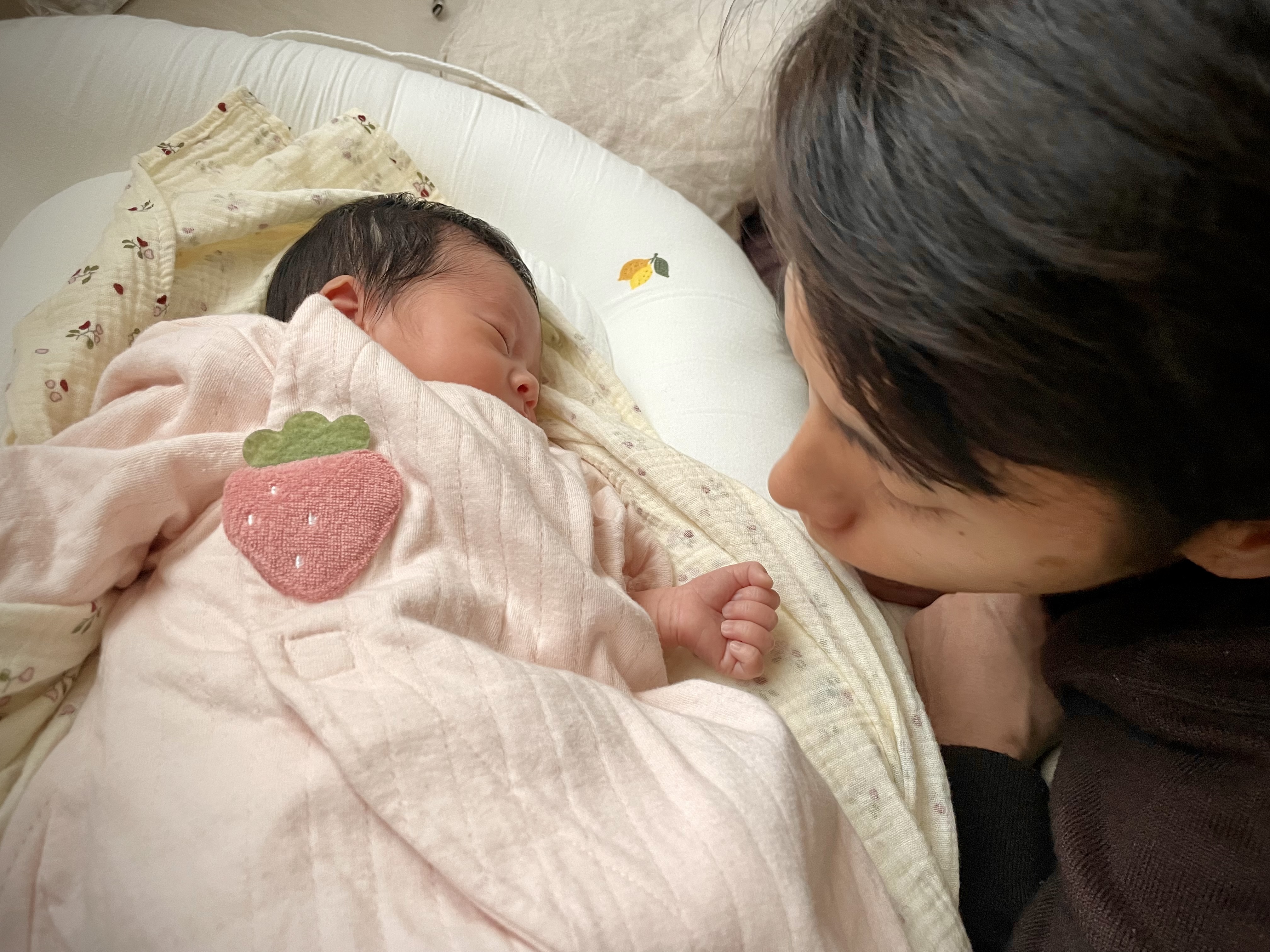
My first daughter was born, and I took approximately four and a half months of parental leave.
Thanks to the company-wide promotion of paternity leave and related education initiatives, the atmosphere was very supportive and made it easy to take the leave.
In particular, the understanding and cooperation of my supervisor and colleagues were invaluable. I received warm words of encouragement, which allowed me to take the leave with peace of mind. Although my absence temporarily increased the workload for others, I am deeply grateful for the support I received.
During my leave, I took full responsibility for household chores for the first two months, including postpartum care for my wife, while also caring for our child. It was a challenging adjustment to a new lifestyle, but the daily growth and cuteness of our baby gave me strength and helped me get through it.
By sharing the same direction and emotional commitment to parenting, I feel that the bond between my wife and me has grown stronger.
I strongly encourage all future fathers to take at least one month of parental leave.


(Nobuyasu Koyanagi, Manufacturing Section No.1, Musashi Plant)

I took 1 year and 4 months of parental leave, from December 15, 2023 to March 31, 2025.
Until then, I had hardly ever used paid leave and had never taken such a long break from work, so I felt very sorry toward everyone. However, thanks to the warm words and encouragement from my supervisor and colleagues, I was able to focus fully on childcare.
Since my first children were twins, the challenges increased as they began to stand, crawl, and roll over. But I’m truly glad I took parental leave, as I was able to witness precious moments that I wouldn’t have seen if I had been working.


Benefits paid to regular employees but not paid to non-regular employees

Allowances that are standard for regular employees but not for non-regular employees include the following (TACHI-S non-consolidated)

  • retirement allowance
  • severance (termination) pay
  • accident compensation
  • long service leave
  • employee stock ownership plan
  • employee petty cash loan program
  • others

Minimum notice period for business changes

As a general rule, personnel changes are to be communicated to the labor union and the individual concerned at least one week in advance (or two weeks in advance if a relocation is involved). In addition, the labor union is to be notified and consulted at the earliest appropriate time regarding the establishment, consolidation, or reorganization of new business sites or offices that would involve the reassignment, transfer, or relocation of a large number of union members.

Living Wage

We review the starting salary for employees hired by our company to ensure that it does not fall below the minimum wage in Tokyo, regardless of their working style or location. Additionally, we negotiate with labor unions regarding wage increases and work to improve living wages through measures such as responding to price increases and benchmarking against companies of similar size in terms of sales revenue, operating profit, market capitalization, etc.